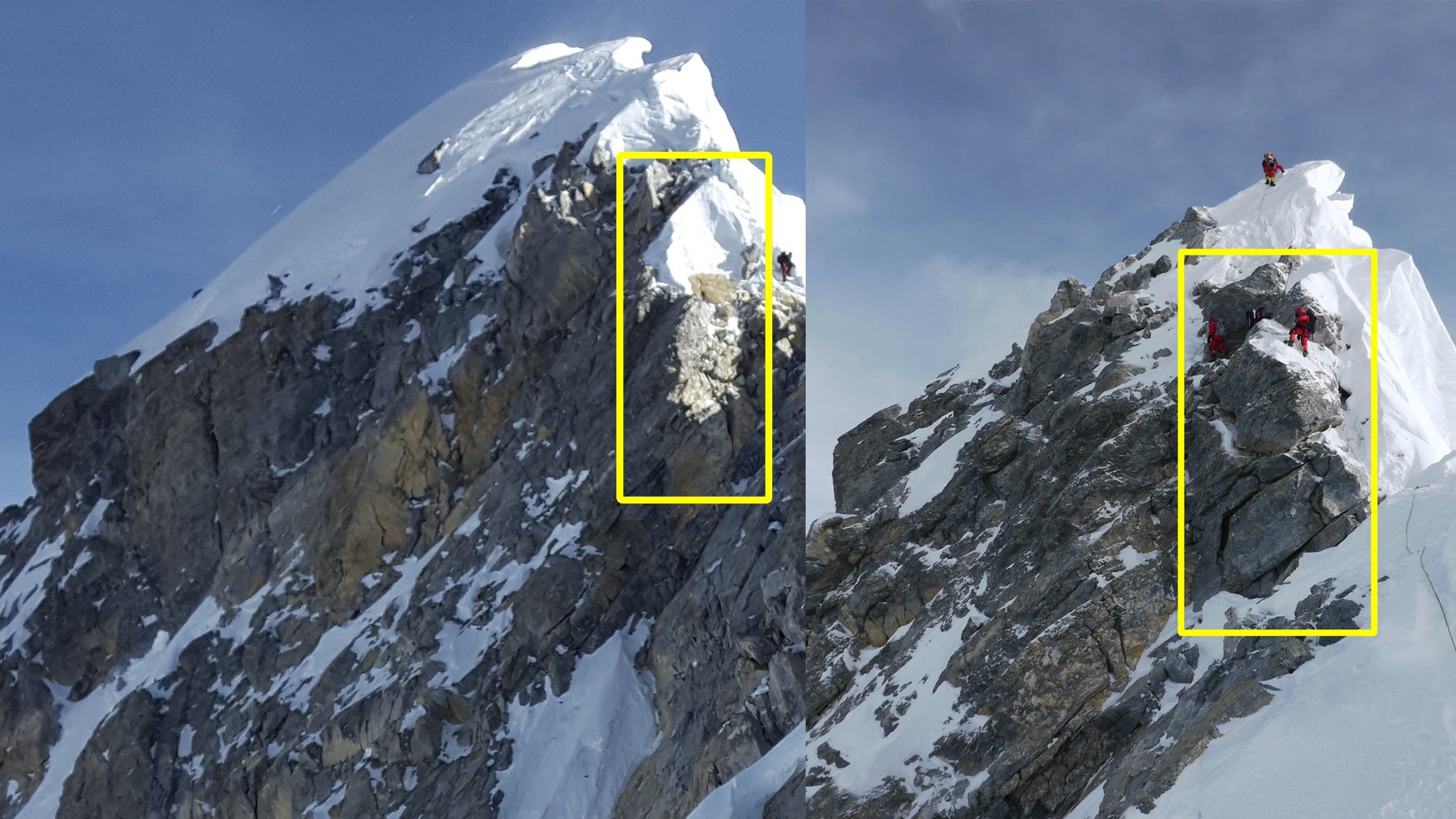
Upon reading “Into Thin Air” by Jon Krakauer many challenges arose that would make Jon’s archetypal Hero’s Journey all the more difficult. For starters the infamous Hillary’s Step that has stumped many a climber, even long after it’s discovery by Edmund Hillary, back in May 28, 1949. Located 28 839 feet above sea level this “rock step some forty feet high…. the rock itself, smooth and almost holdless” (Krakauer 17) has been dubbed one of the most technically difficult sections on Everest. However, at the time of the creation of this blog, the Hillary Step is thought to be no more. Just in 2017, American climbers have explained “that the main boulder—the largest and highest rock in the feature—is gone” (Bouchard). Before this alteration, a serious bottleneck affect was forced upon the climbers making the travel up and down the step, one at a time. Jon Krakauer has personal experience with this issue as he had to wait over an hour before traffic cleared so he could climb down to where Andy was waiting with the excess oxygen bottles (Krakauer 187), any longer and Jon could’ve blacked out due to not enough oxygen reaching his brain. If Jon was to climb Everest today the bottleneck effect has been significantly reduced “improving two way traffic” (Bouchard) allowing for safer and more efficient passage near the infamous Summit.
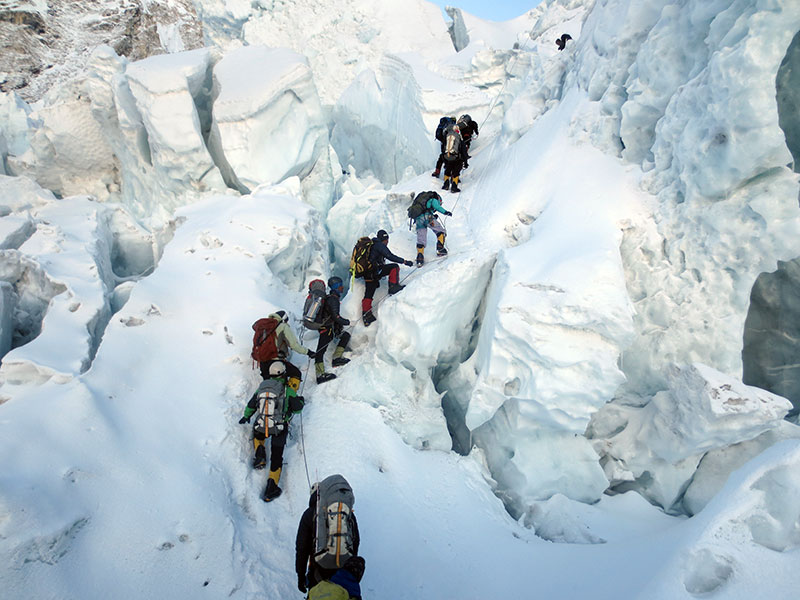
Another dangerous obstacle that one is introduced to right after leaving base camp is the Khumbu Icefall which is responsible for “44 deaths” (Allan). This section of climbing Everest is also technique focused since many crevasses are scattered throughout this particular area, just waiting to swallow up an unaware climber. Besides the numerous ice enveloped crevasses, the odds of an ice serac falling, breaking apart and landing on your head are slim, but present. Jon famously quoted this area “like playing a round of Russian roulette” (Krakauer 76) which is definitely accurate as one can never tell when huge blocks of ice could be raining upon your head. This area is so dangerous that “one team…would be responsible for establishing and maintaining a route through the Icefall” (Krakauer 76) which is of upmost importance to ensure the safety of those trying to climb the tallest mountain in the world.
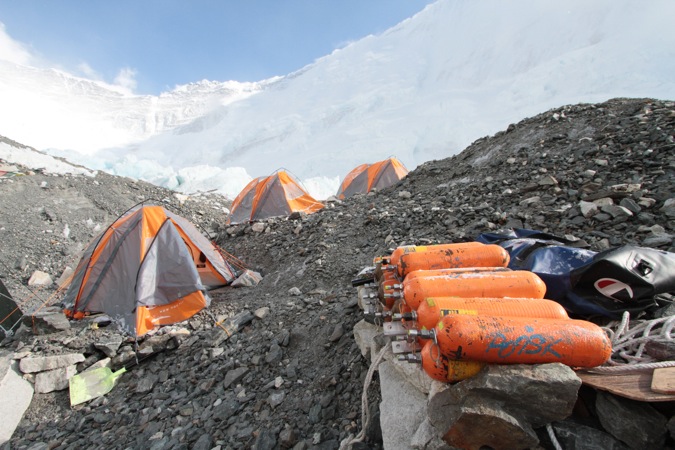
Lastly, one can not go on to talk about the dangers of Mt. Everest with out talking about high altitude sickness and its affects on the human body. Although this challenge is not a geological aspect of the climb, it is still a very dangerous condition that amateur climbers forget about, often time ruining the rest of their climb as symptoms can become very severe, very quickly. Since Everest is 29 028 feet one can begin to feel the symptoms of high altitude right at base camp in terms of shortness of breath, fatigue, and nausea. Although Jon only experienced minor symptoms on the way up to the summit, he began to really experience the full force of Mt. Everest’s high altitude when his oxygen canister ran out. This definitely is a scary situation as Jon compared it to being drugged by a sedative (Krakauer 186) luckily he made it to Andy who had a fresh supply waiting. Taking all things into account, Mount Everest is no joke and anyone brave enough to climb the mountain deserves respect.
References
American Climbers Confirm the Hillary Step Is Gone
https://www.britannica.com/biography/Edmund-Hillary
https://www.merriam-webster.com/dictionary/crevasse
https://en.wikipedia.org/wiki/Serac
https://www.webmd.com/a-to-z-guides/altitude-sickness
“Into Thin Air” by Jon Krakauer
 Ben's Blog